Monthly Archives: September 2026

Manfred Nagl: Gothic churches, their design, and similarities to design in Civil or Software Engineering

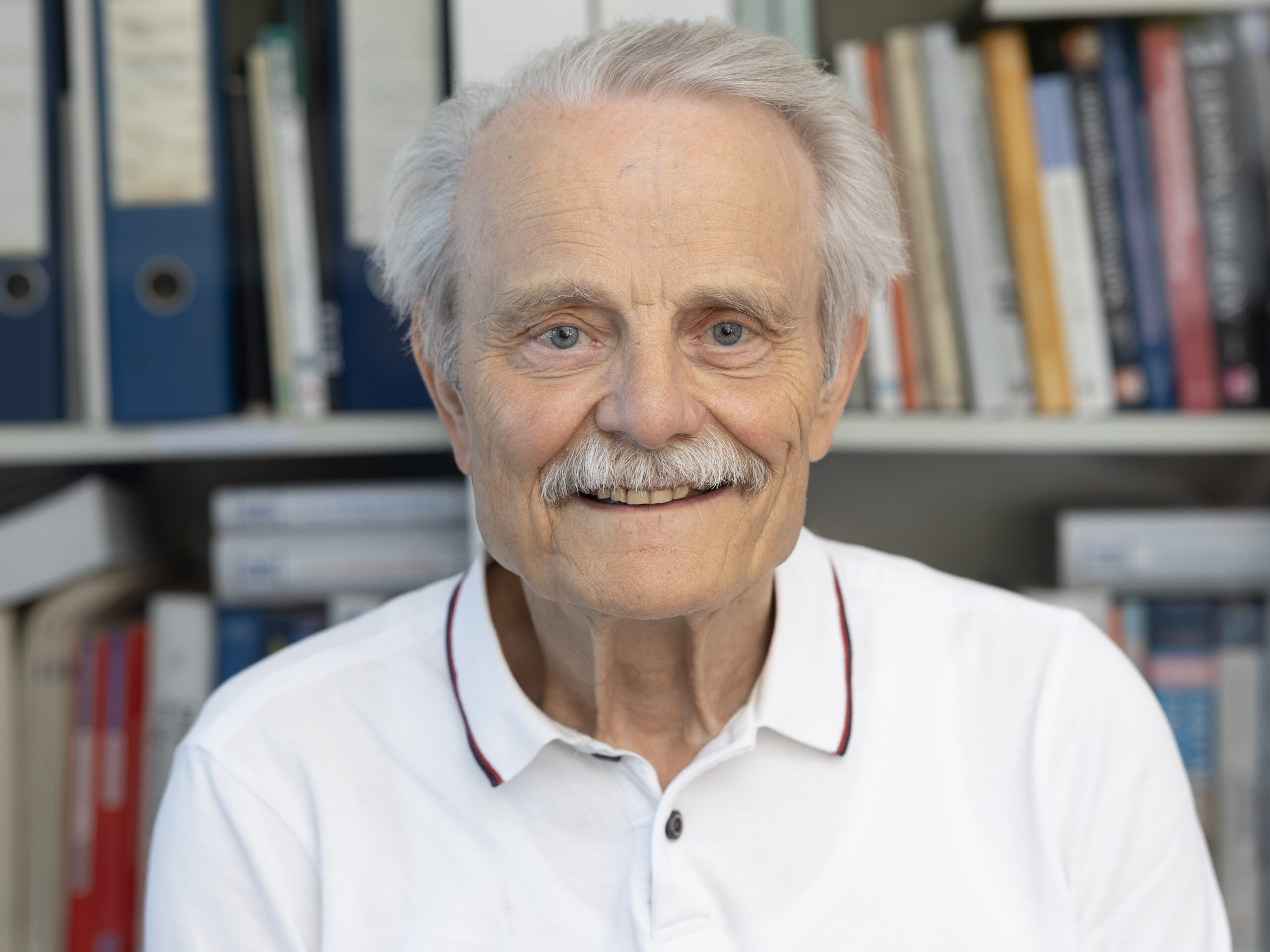
ManfredProf. Manfred Nagl received Doctorate and Habilitation with research on Formal Graph Rewriting at Friedrich-Alexander University Erlangen-Nürnberg after some time at Siemens Research Center. After professorships at Koblenz and Osnabrück he came 1986 to RWTH Aachen University, where he headed the chair of Software Engineering until 2009. He led important projects as IPSEN on integrated tools for Software Engineering, SUKITS Research Group with Mechanical Engineering, Collaborative Research Centre and Transfer Centre IMPROVE with Chemical Engineering, mostly funded by the German Research Foundation (DFG). About 50 dissertations were carried out in his group. He trained about 20 future professors and about 15 top industry leaders. He is still active as professor emeritus. For more details see https://www.se-rwth.de/staff/Manfred.Nagl.

Gothic churches, their design, and similarities to design in Civil or Software Engineering

After an intro to Gothic churches and discussing the Cathedral of Reims as example, we characterize the class of these churches. The design of the churches shares similarities with modern design principles for Software like Design Patterns, Algorithmic Design, Parametric Design for different granularities, Design and Reuse, Design of Classes, and Generative Design. Some of them are discussed in more detail in the central part of the talk. We close by highlighting the connections between the design of these churches and the design of engineering disciplines. This is extremely surprising, as the churches are about 700 to 800 years old.

His talk takes place on Wednesday, September 30, 2026 at 16:00 in room E105.
The talk will be streamed live at https://www.youtube.com/live/d9tGQcEmzk4.
Daniel Ramos: Rigorous Forensic Automatic Speaker Recognition – Bayesian Decision Theory, Probabilistic Calibration and Case-Specific Validation

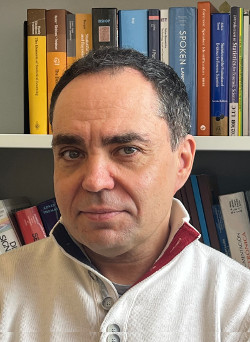
DanielDaniel Ramos is an Associate Professor at the Universidad Autónoma de Madrid and a member of the AUDIAS research group (https://audias.ii.uam.es/). His research focuses on forensic evidence evaluation and validation, speech and signal processing, machine learning, and artificial intelligence. He has visited different institutions worldwide with a strong research focus on forensic interpretation and Bayesian machine learning, including the University of Lausanne (Switzerland), the University of Stellenbosch (South Africa), the University of Edinburgh (UK), the Netherlands Forensic Institute (NFI), and the University of Cambridge (UK). He has also been a visiting professor in probabilistic machine learning at the Universidad de Buenos Aires (Argentina). Dr. Ramos has collaborated with different forensic institutions, notably in the long term with the Spanish Guardia Civil and the NFI, as well as with the Institute of Forensic Research at Krakow (Poland) and the International Forensic Research Institute at Florida International University (USA). An associate member of the ENFSI Forensic Speech and Audio Working Group, Dr. Ramos has pioneered the field of forensic speaker recognition using likelihood ratios, but also in other forensic disciplines such as forensic chemistry. His contributions to the validation of forensic likelihood ratios now serve as the basis for guidelines in different forensic institutions across Europe. He has been invited to multiple scientific events related to forensic science, notably by the NFI and the National Institute of Standards and Technology (NIST), and its Organization of Scientific Area Committees (OSAC), which drives the development of standards for forensic science in the USA.

Rigorous Forensic Automatic Speaker Recognition: Bayesian Decision Theory, Probabilistic Calibration and Case-Specific Validation

The use of automatic speaker recognition systems in forensic science has undergone a dramatic improvement in recent years in terms of scientific rigor, objectivity, and consensus. As a result, the discipline has become strongly aligned with the recommendations of the recently released ISO 21043 standard for forensic sciences. In this talk, we will identify three elements that are now essential for the proper and standardized use of automatic speaker recognition systems in forensic science. First, the adoption of a Bayesian decision-theoretical framework ensures the logical incorporation of system information, expressed as a likelihood ratio, into the decision-making process of judges or juries. Second, the probabilistic calibration of likelihood ratios ensures that decisions are made optimally by the fact finder. Third, the strict and systematic validation of systems under case-specific conditions ensures that forensic casework is conducted with sufficient quality. In this context, the contribution and impact of the speaker recognition community have been paramount, with the proposal of techniques such as score-based likelihood ratios, proper scoring rules for validation, and probabilistic calibration. These methods have since been progressively adopted in other areas, including forensic biometrics, forensic chemistry, and forensic DNA profiling, and now extend to an ever-growing range of forensic disciplines.

His talk takes place on Monday, September 14, 2026 at 13:00 in room G202.
The talk will be streamed live at https://www.youtube.com/live/5mLAG4-MkvA.